

is showing up for yourself an act of systemic rebellion?

tldr;
we often mistake the "hardest part" of art for the technique, the market, or the final product. but the true friction lies in the simple, quiet act of showing up for the practice. in a system that only values us when we are producing, choosing to sit with yourself and your process is a radical claim of autonomy. at BLANK, we’re exploring why the threshold of the studio is the highest mountain you’ll ever climb.
reclaiming the victory of presence in your practice
we have been conditioned to believe that the "hardest part" of being an artist is the struggle for recognition or the mastery of a craft. we look at the finished pieces in the gallery and assume the difficulty was in the execution. but for the working creator, the real battle happens much earlier. it happens in the kitchen when you decide whether to open your laptop. it happens in the hallway when you decide whether to walk into the studio.
showing up is the threshold. and right now, the threshold is higher than ever.
the cost of the threshold
why is it so difficult to show up for something we supposedly love? it isn't a lack of discipline; it’s a collision of systemic and psychological pressures.
the utility trap: we live in a culture that demands a payout for every minute spent. if we aren't producing something marketable, the system tells us we are wasting time. showing up without a guaranteed result feels like a failure before you’ve even started.
the perfectionist filter: the idea that every mark must be meaningful or "masterful" creates a paralyzing fear of the messy middle. we avoid the practice because we are afraid that nothing may happen when we are just playing.
the fuel gap: the 9-5 grind doesn't just take your time; it takes your decision-making energy. by the time you reach your practice, the tank is empty. choosing to show up when you are depleted is a heavy lift that the system rarely acknowledges.
the biological resilience of the habit
there is a scholarly side to this struggle. research in neuroplasticity suggests that the act of "showing up" even when the work is "bad" or the session is short is what actually builds the creative engine.
lowering the cortisol ceiling: clinical studies show that simply engaging in a creative habit, regardless of the quality, lowers stress hormones and strengthens neural pathways associated with problem-solving.
the "default mode" activation: when we show up and sit in the silence, we allow our brains to slip into the default mode network. this is where the most radical connections happen—the ones that the "productive" mind can't force.
practice as a protective factor: creativity is a primary driver of psychological resilience. showing up for your practice isn't just about art; it’s about maintaining the mental architecture necessary to survive a chaotic world.
the BLANK perspective: the seat is the victory
at BLANK, we believe that the work is what happens to you while you are making the art. the result is just the byproduct.
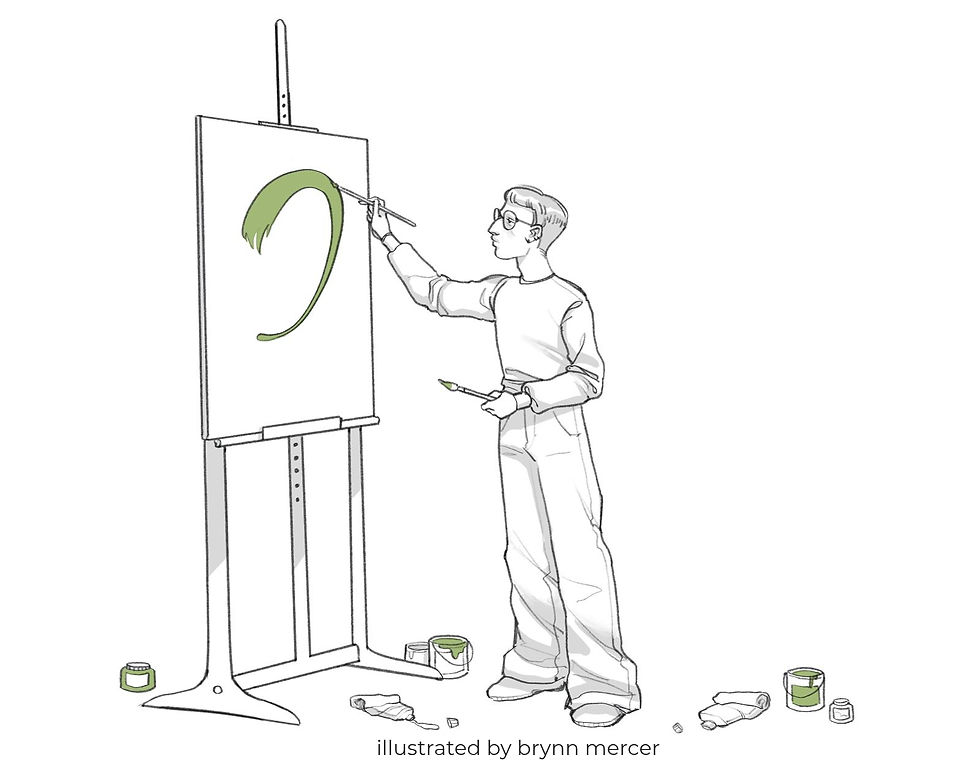
if you sat in the chair today, you won. if you picked up the brush and made one "ugly" line, you rebelled against a system that wants you to be a polished machine.
we aren't looking for the mona lisa; we are looking for the person who had the grit to show up for themselves when everything else told them to stay on the couch.
the script says you are only as good as your last output. we say you are as good as your last arrival.
join the conversation
what was your "threshold" today? how did you push past the resistance to show up for your practice? let’s celebrate the arrival, not just the result.
join the BLANK arts society community on youtube here.


Comments